CommonLit
4
Product Details
- Website
- https://www.commonlit.org/en
- Overview
-
CommonLit is a nonprofit digital literacy platform offering a full curriculum and supplemental library. It is intended primarily for upper-elementary through high-school readers, including multilingual learners and students needing differentiated access, with ELA teachers, students, literacy specialists, and curriculum leaders using it to support grade-level reading, knowledge building, text evidence, vocabulary, discussion, and writing.
Teachers use text sets, units, paired texts, questions, discussion, writing, assessment, and accessibility supports for whole-class or targeted instruction. Districts should evaluate how the product fits adopted curriculum, student needs, instructional time, and the work educators must do around it.
- Student Data Privacy
-
Review the Common Sense Privacy Rating:
https://www.commonsense.org/education/reviews/commonlit
CommonLit Privacy Policy:
https://www.commonlit.org/en/privacy
Signed California Student Data Privacy Agreement?
No - Features
-
Audience and instructional role
- Grades / learners: upper-elementary through high-school readers, including multilingual learners and students needing differentiated access
- Primary users: ELA teachers, students, literacy specialists, and curriculum leaders
- Learning focus: grade-level reading, knowledge building, text evidence, vocabulary, discussion, and writing — a nonprofit digital literacy platform offering a full curriculum and supplemental library
How it supports learning- Teachers use text sets, units, paired texts, questions, discussion, writing, assessment, and accessibility supports for whole-class or targeted instruction.
- Teachers should connect use to explicit learning goals and inspect student work rather than rely on completion or engagement alone.
Implementation and instructional decisions- Distinguish CommonLit 360 core curriculum from the supplemental library and assessment products when documenting implementation.
- Districts should confirm accessibility, language support, student-data practices, assignment workflow, reporting, and the continuing role of teacher judgment.
- Interoperabilty
- Company News
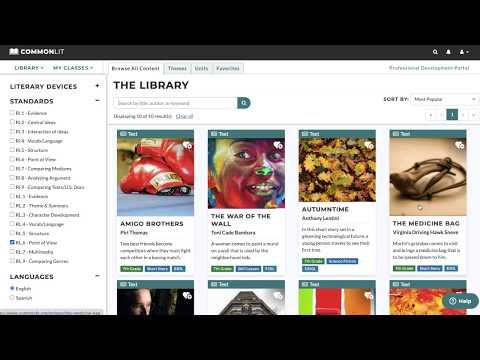
CommonLit is a comprehensive literacy program with thousands of reading lessons, full-year ELA curriculum, benchmark assessments, and standards-based data for teachers.
CommonLit is a comprehensive literacy program with thousands of reading lessons, full-year ELA curriculum, benchmark assessments, and standards-based data for teachers.
Videos