



Listenwise
5
Product Details
- Overview
-
Listenwise is a classroom audio and video lesson platform built around authentic public-media content. It is intended primarily for elementary through high-school learners, including multilingual learners, with students, ELA and content-area teachers, multilingual-learner staff, and literacy specialists using it to support listening comprehension, academic language, current events, speaking, reading, and writing.
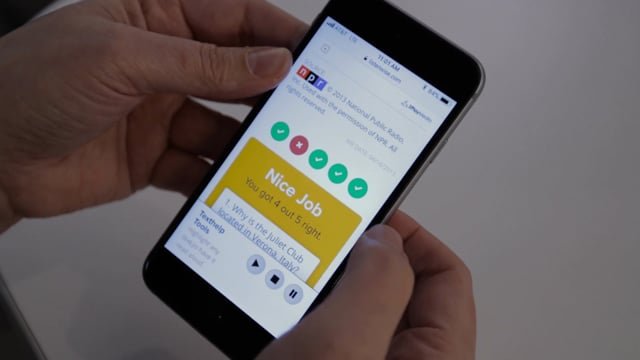
Students listen to curated stories with transcripts, vocabulary, comprehension supports, discussion prompts, and connected assessment or writing. Districts should evaluate how the product fits adopted curriculum, student needs, instructional time, and the work educators must do around it.
- Student Data Privacy
-
Review the Common Sense Privacy Rating:
https://privacy.commonsense.org/evaluation/ListenwiseListenwise Privacy Policy:
https://listenwise.com/terms/
Signed California Student Data Privacy Agreement?
No - Features
-
Audience and instructional role
- Grades / learners: elementary through high-school learners, including multilingual learners
- Primary users: students, ELA and content-area teachers, multilingual-learner staff, and literacy specialists
- Learning focus: listening comprehension, academic language, current events, speaking, reading, and writing — a classroom audio and video lesson platform built around authentic public-media content
How it supports learning- Students listen to curated stories with transcripts, vocabulary, comprehension supports, discussion prompts, and connected assessment or writing.
- Teachers should connect use to explicit learning goals and inspect student work rather than rely on completion, time-on-task, or engagement alone.
Implementation and instructional decisions- Select timely content carefully, provide context and multiple perspectives, and confirm whether Lingolift or other bundled components are also licensed.
- Districts should confirm accessibility, language support, student-data practices, assignment workflow, reporting, and the continuing role of teacher judgment.
- Interoperabilty
- Support Options
-
- Email •
- Web
- Company News
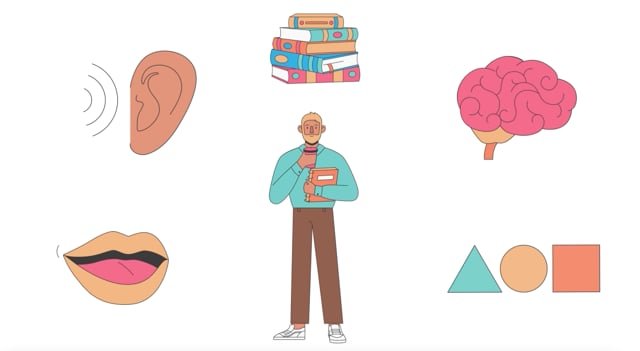
Why practice listening? Because listening comprehension is fundamental to literacy. Common Core recognizes that listening is a key piece of the literacy puzzle. However, listening and speaking standards are still not being addressed in classrooms.
Research shows that if you are not a good listener, you won’t be a good reader.At its core is the basic tenet that reading comprehension is the result of listening comprehension plus decoding (Gough and Tunmer, 1986). Now there is new research e. vidence concerning a growing number of children who fail to develop adequate reading comprehension skills primarily due to poor listening comprehension. (Hogan, 2014)
Research shows that if you are not a good listener, you won’t be a good reader.At its core is the basic tenet that reading comprehension is the result of listening comprehension plus decoding (Gough and Tunmer, 1986). Now there is new research e. vidence concerning a growing number of children who fail to develop adequate reading comprehension skills primarily due to poor listening comprehension. (Hogan, 2014)
And since students can generally listen 2-3 grade levels above what they can read, we can use the power of listening to introduce more complex language, vocabulary and topics. Read aloud and other listening activities have long been effective for introducing advanced vocabulary in context. Building vocabulary and background knowledge have been proven keys to reading comprehension outcomes.
Why practice listening? Because listening comprehension is fundamental to literacy. Common Core recognizes that listening is a key piece of the literacy puzzle. However, listening and speaking standards are still not being addressed in classrooms.
Research shows that if you are not a good listener, you won’t be a good reader.At its core is the basic tenet that reading comprehension is the result of listening comprehension plus decoding (Gough and Tunmer, 1986). Now there is new research e. vidence concerning a growing number of children who fail to develop adequate reading comprehension skills primarily due to poor listening comprehension. (Hogan, 2014)
Research shows that if you are not a good listener, you won’t be a good reader.At its core is the basic tenet that reading comprehension is the result of listening comprehension plus decoding (Gough and Tunmer, 1986). Now there is new research e. vidence concerning a growing number of children who fail to develop adequate reading comprehension skills primarily due to poor listening comprehension. (Hogan, 2014)
And since students can generally listen 2-3 grade levels above what they can read, we can use the power of listening to introduce more complex language, vocabulary and topics. Read aloud and other listening activities have long been effective for introducing advanced vocabulary in context. Building vocabulary and background knowledge have been proven keys to reading comprehension outcomes.
Videos
01:20
02:17
01:30
02:06
01:37